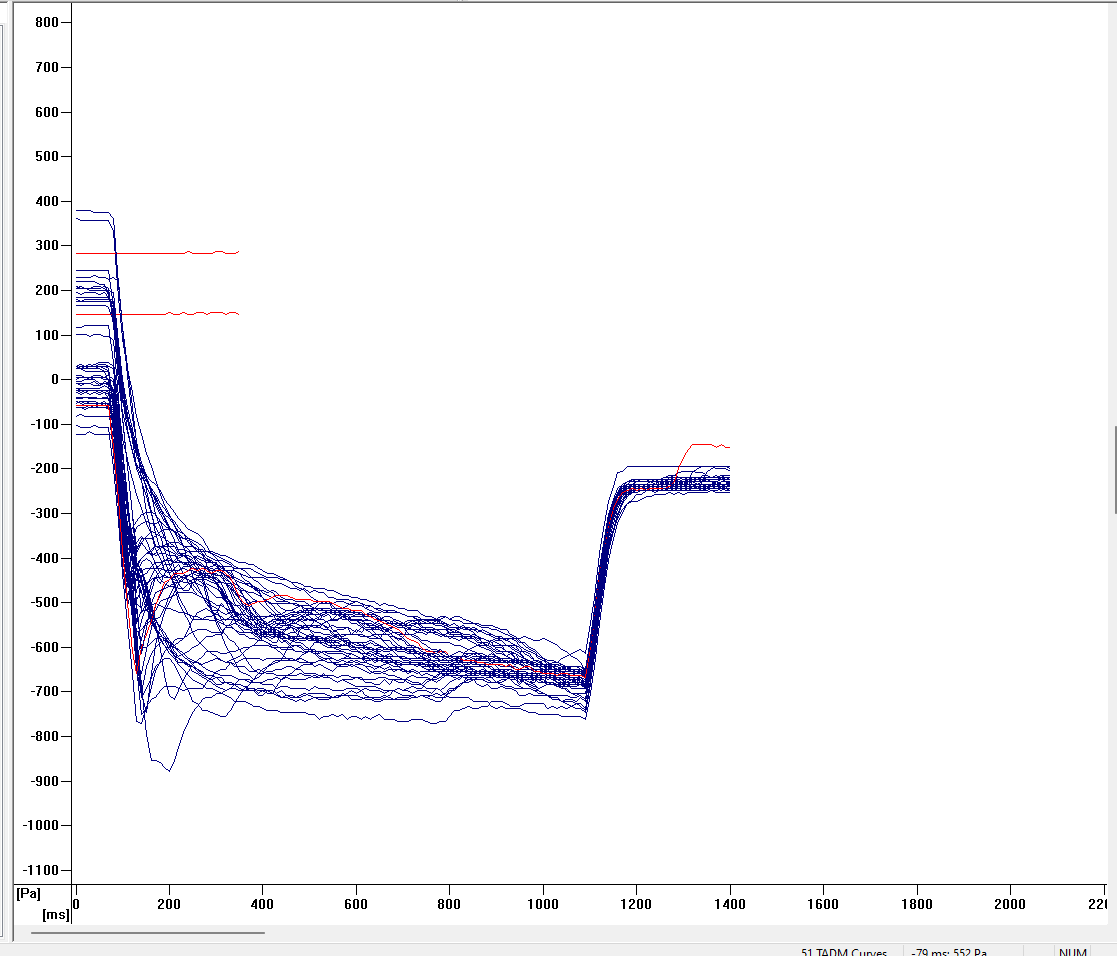
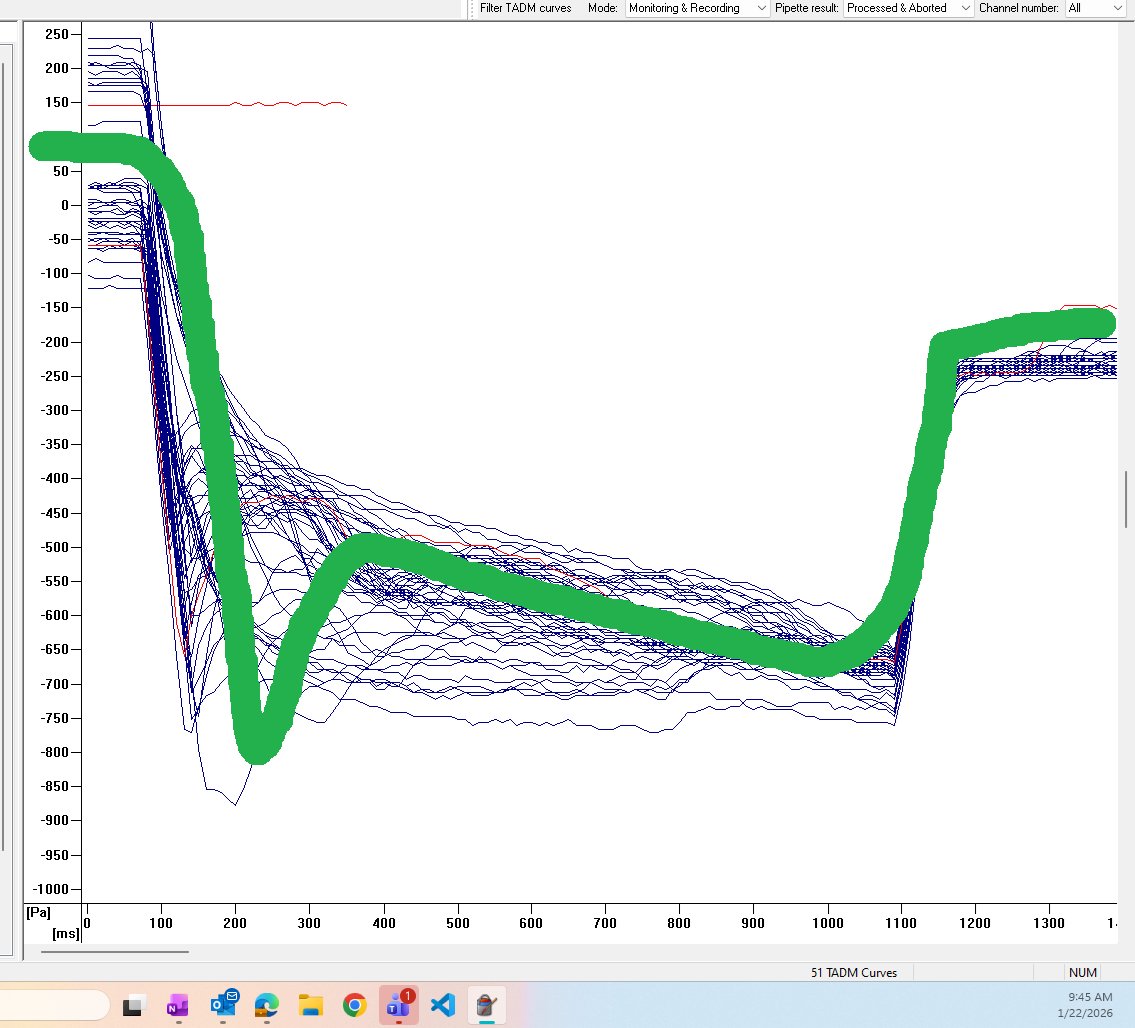
Attached is a photo of TADM curves for a solution. We originally had normal looking curves however the curves would occasionally start to look erratic. But once we decided to refrigerate the solution, the curves come out looking more erratic.
Some of the pressures start out super high. Like the starting pressure is kind of more stratified.
The curves aren’t consistent and exhibit more erratic behavior like swooping real low and then jumping up.
Does anybody have solutions to fix this to make the curves look better, start out at a less stratified pressure? Thanks! I wasn’t sure if I needed to aspirate slower or what. I was curious if anyone knew what caused #1 and #2.
refrigeration is definitely a root cause,
without knowing the formulation of the solution - difficult to be 100 % specific
but i can summarize that a pre-mix of the solution would reduce the inconsistency - it’s possible that the solution, at a chilled temperature leads to a phase separation in the tube & a pre-mix would improve this
for the high pressures, this is due to the viscosity increase - here, i would recommend lowering the aspiration speed (start with 50% of current speed) and review a new set of data
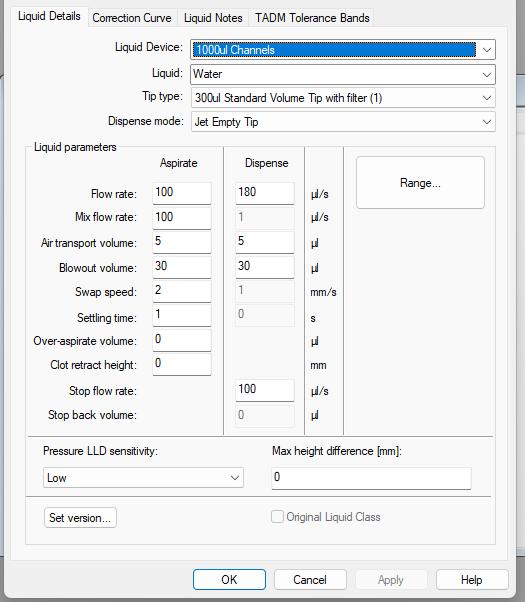
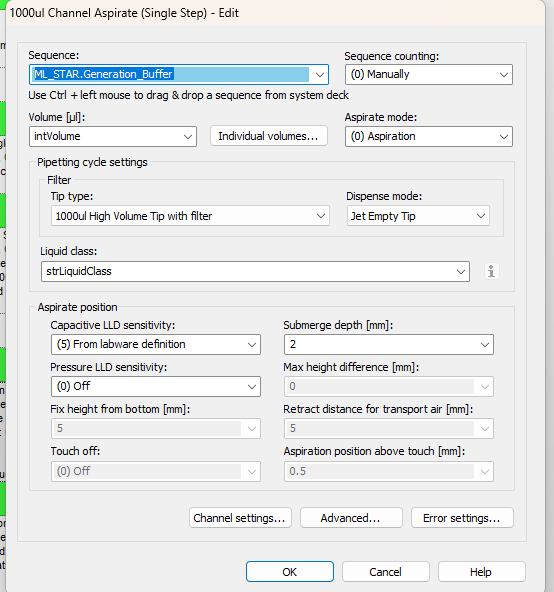
Can you provide more details on the aspiration step?
You could see this behavior if you are aspirating from a fixed height from a tube/well, but the volume in the tube/well varies. The start pressure would then be different if there is more liquid in the tube/well. This would not indicate that something was wrong or improper about the transfer - just that if you can’t control for a consistent start volume, then you’d have to set your TADM guardbands wider at the start.
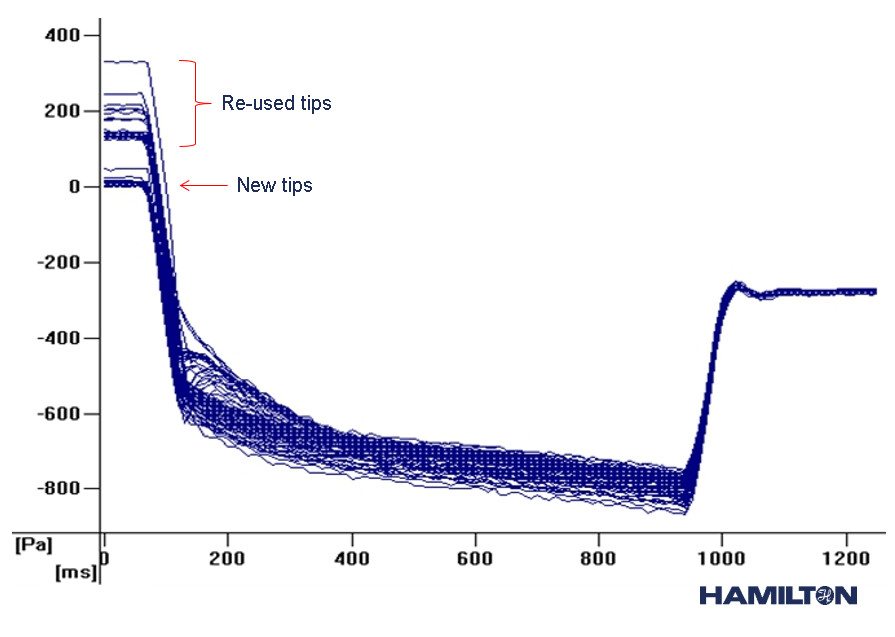
You may also see this behavior if you’re reusing tips. Any residual liquid left in the tips on a subsequent aspirate step would contribute to varying start pressure readings.
Sometimes we reuse tips and prewet the tip. Do you think this could be caused if our reagent container is not level for all 12 channels? This is where we see it the most
And then sometimes we use a new tip and don’t prewet. For this case, we normally see it less.
After pulling from refrigeration and before use, are you vortexing it? I’m assuming this is a bulk reagent and not in a plate. You can also see this behavior when reagents are not thoroughly mixed.
As Eric mentioned, the starting heights above 0 are typically caused by re-used tips where a bit of liquid is still within the tip entrance.
Thanks yall. This is very helpful. We mix via gentle inversion a few times before using the solution. how can we make sure to get out all of the liquid within the tip entrance if we are reusing tips? like after the prewetting step
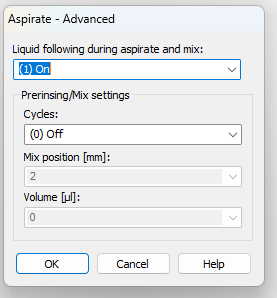
If you are transferring to an empty well, you could switch to a surface empty liquid class and dispense low in the well with no liquid following. Make sure to use a retract distance that will take you out of the liquid, so the air gap is aspirating air instead of liquid. This tends to be a cleaner transfer which lends to tip reuse better for reagent additions.
Also, sometimes we get these aypical looking curves. I drew an example in green. Do you know what can causes this? Like it will immediately start spiking down and then suddenly go up and finish out looking like a normal curve. But the initial drop makes it atypical looking.
We get this just pipetting stuff like 99.9% water solutions.
Just to further clarify the different start pressure readings - it doesn’t necessarily indicate that something is wrong or results in an imporper liquid transfer. TADM is just showing that the conditions were different at the start of each transfer.
This is one of the examples covered in our Liquid Handling Training course:
At Labcorp, we call those curves (in green) Sharktooths lol. Because they look like a sharktooth. From your experience, do yall see that this still has proper liquid transfer for them? So, like negligible bias in volumetric delivery of what was supposed to be delivered?