Hello everyone,
If you’ve worked with a Hamilton liquid handler, you know how powerful it is—but writing and debugging methods can be a major bottleneck, especially when you need to iterate on experiments quickly.
To streamline this, I’ve been developing a web application called VerisFlow . The goal is simple: to let you generate executable Hamilton HSL files using plain, everyday language.
How It Works
You describe your experimental steps in natural language, and VerisFlow translates them into HSL code. For example:
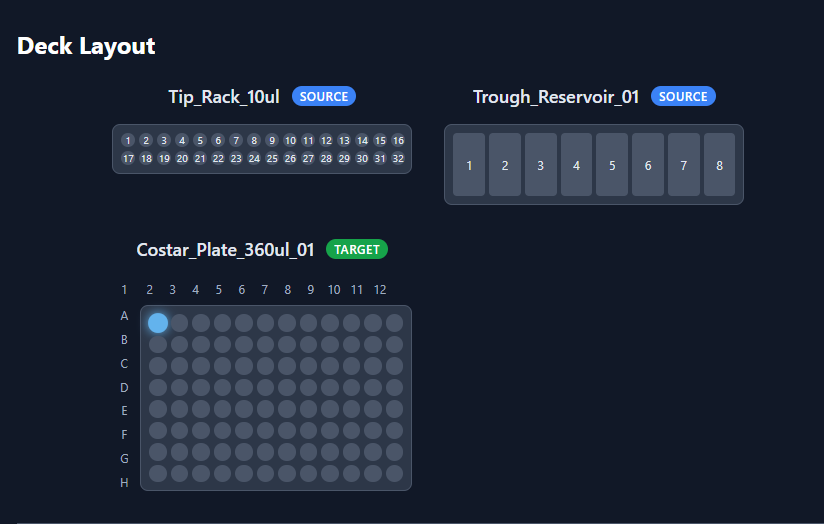
“Aspirate 50ul of water from well A1 of reagent trough 1, and dispense it into wells A1 through A12 of a 96-well plate.”
The application, powered by the Gemini API, understands your intent and automatically generates the corresponding .hsl file for you.
The Tech Behind It
VerisFlow uses the Gemini API to understand your commands. It then translates your intent into structured HSL code based on a library of pre-defined method templates and rules.
Try the Demo & Share Your Feedback!
I’ve deployed an early proof-of-concept and would be grateful for your thoughts. Your feedback is crucial for shaping the future of this project!
 Live Demo: www.verisflow.com
Current Status & What’s Next
- Current Status: The project is in its early stages. It supports basic pipetting commands, and the generated code runs in the Hamilton simulation environment.
- Future Goals: I plan to expand its capabilities to handle more complex automation processes, making it a truly powerful assistant for researchers.
How You Can Help
I am incredibly eager to hear from actual users. Any feedback is welcome:
 Feature Requests: What complex operations would you love to see automated?
 General Thoughts: What is your overall impression of the idea and the demo?
 Bug Reports: Did anything not work as you expected?
Privacy
Your privacy is a priority. The web application uses a completely anonymous, randomly generated ID for login. No personal or sensitive experimental data is collected.
Thank you for your time. I look forward to hearing from you!