I am using Hamilton grippers to pick up plates from the Hamilton heater shaker off the deck. Do you have any recommended parameters for picking them up? The plate is a little snug to the heater shakers and so it takes a little more to pull it off using the automated grippers.
I am having success with:
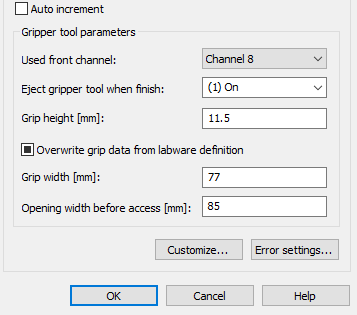
Grip width (mm): 75
Opening width before access (mm): 90
Grip height (mm): 4
But this bends the channels slightly. I don’t know if this is healthy for the machine over time. But if I go to a larger grip width, it isn’t strong enough to pick up the plate.
Thank you!!
David Tran
Obvious question - do you unlock the plate clamp before you pull them off the HHS?
What kind of plate is it and is there a lot of liquid in it?
1 Like
Yes we unlock. It is a 2-mL plate. Sometimes up to 500 uL water
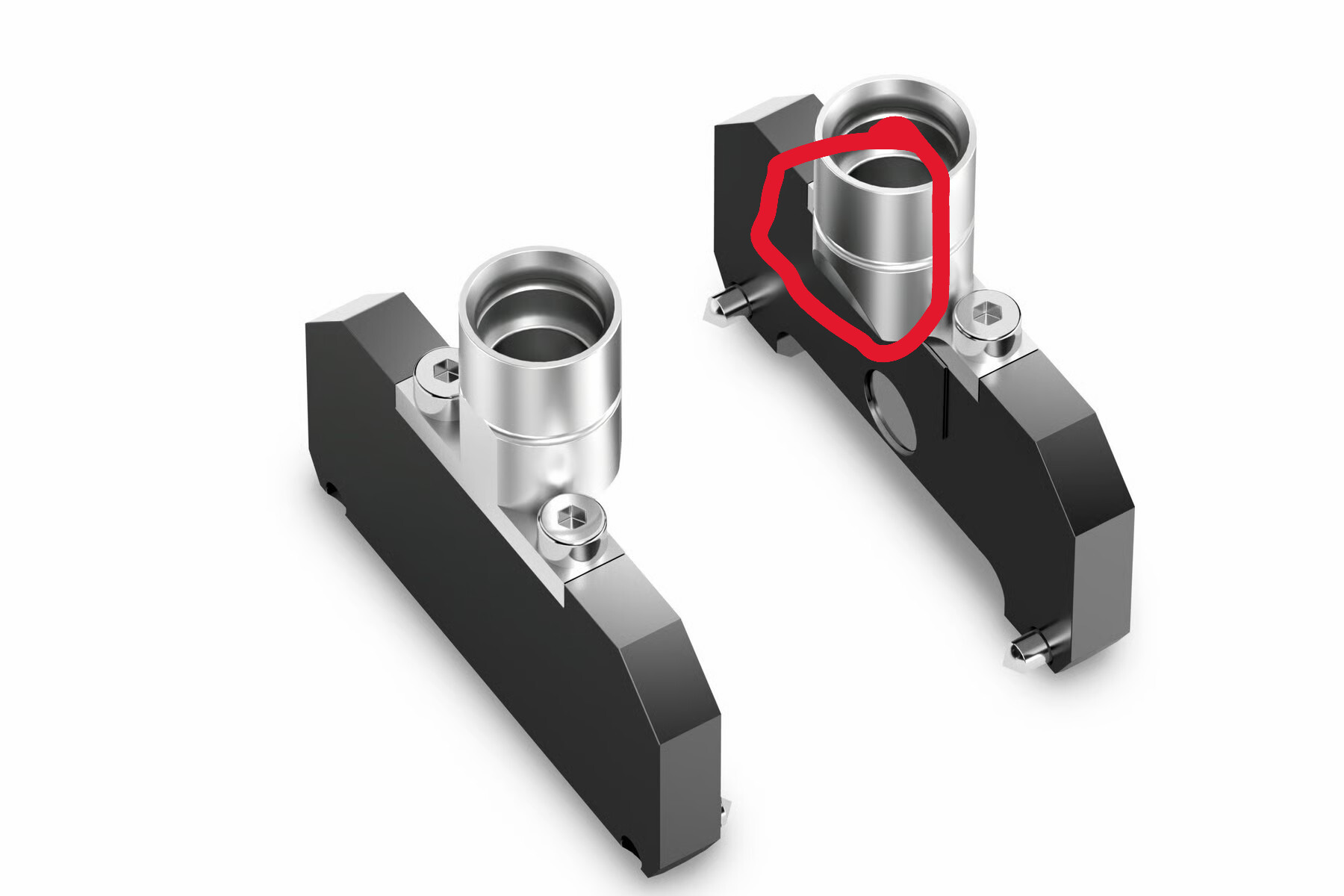
Something to check when picking up the plate from the HHS with the CORE Paddles is to view the pickup from the side (left or right). The channel mount can contact your plate and not grip it well. So check that your labware definition, teaching, and grip height look good to where the pins are actually making good contact with your labware.
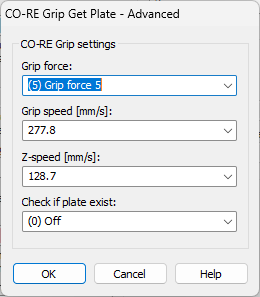
Another thing to check is the grip force under advance settings.
We move 500uL and 1000uL Eppf 96W plates on and off the HHS all day long. I do see some channel bending but we haven’t had to much downstream issues with it. Channel alignment needs to be checked and adjusted more often it seemed. We plan to implement switching different sets of channels doing the movement to spread the wear around.
Thanks for the info! Sometimes my plate fits too snug to the HHS and the instrument does not apply enough force to pull the plate off. Maybe I need to go higher.
Yeah, the height you can grip the plate has to be closer to the top for the CO-RE channels. There’s not a lot of space between the pins and the chamfer where the channels are.
4mm from the top should be high enough though, but if your definition is off it could be clipping.
I’m curious what is causing the plate to feel snug on the HHS when it unlocks though. The clamps move pretty far and you should have quite a bit of play moving the plate around on top of the HHS. If it’s just really heavy and it’s not clipping the HHS clamp / sticking on some adhesive, I don’t think there’s much to do other than rotate the front channel to distribute the wear.
What HHS adapter are you using and what plate? It’s possible that you have a bent post in the adapter and its making contact with your plate, or alternatively you have a burr in the HHS adapter that’s catching on the plate.
I have also had this issue with plates moving off of the HHS using the paddle attachments. When moving a Biorad hardshell 96 well plate I use the settings below, but once in a while the paddles slip off and do not move the plate as intended which causes a big mess. Grip force is set to “Max” (Venus 4 settings). I’d be interested to know if you find a resolution.
The grip parameters used for that plate type in our NGS applications are:
- Grip height: 6
- Grip width: 82
- Grip open width: 86
- Grip force: 5
I suspect your grip height may be too large meaning it’s grabbing at the bottom of the plate. You may be running into the problem that @bowlineknot pointed out above.
A solution for using the Hamilton shaker
The Hamilton shaker has some limitations. For example, we cannot use DW plates at speeds above 2000 RPM. Even at 1700 RPM, the plate is thrown off the deck.
Once, during a test at 1800 RPM, the plate even ended up stopping at home  .
.
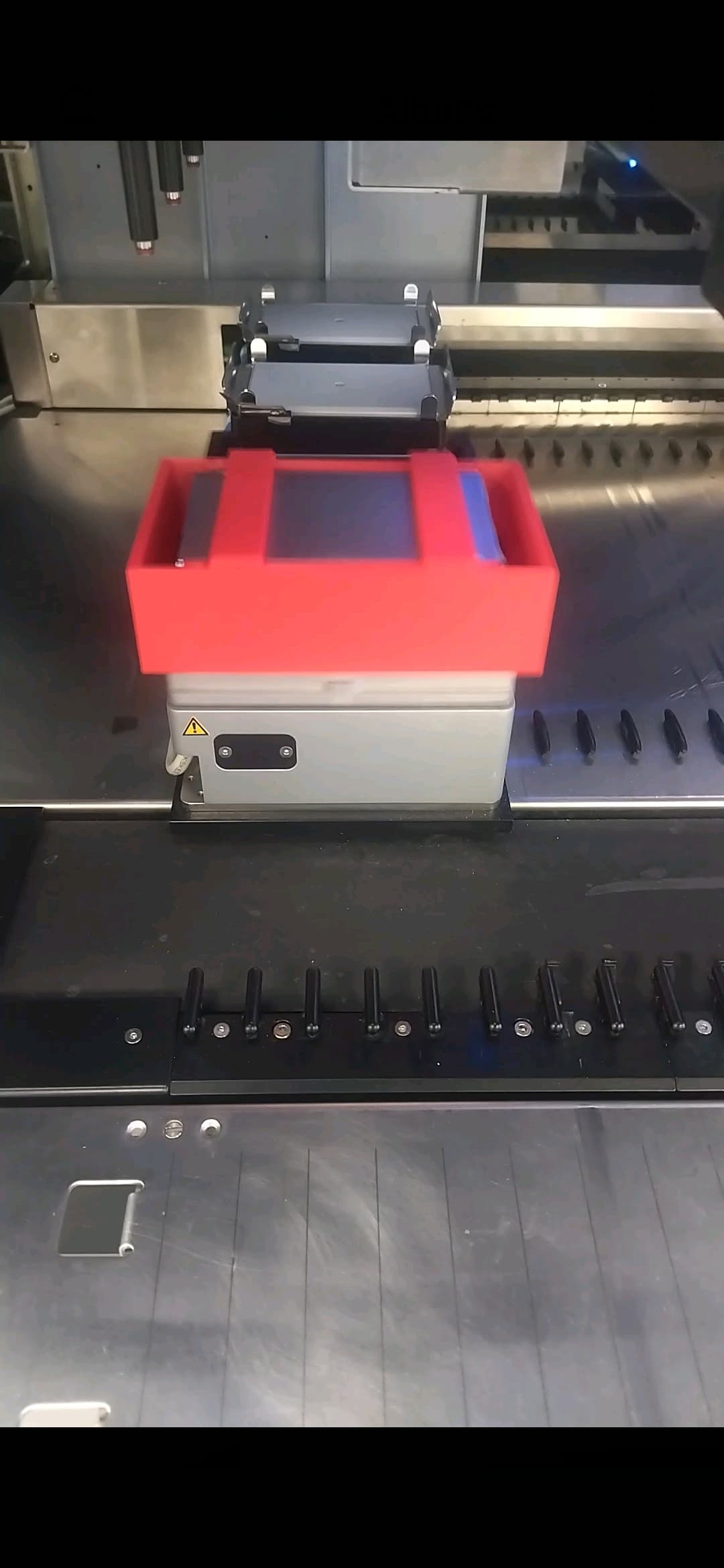
So, I designed a support to secure the plate on the shaker and to better explore the shaker’s capabilities. Some extraction routines here perform better with shaking speeds above 1800 RPM.
Here’s a picture for you to see, as well as the file for 3D printing.
1 Like
Interesting. Do you use a flat adapter on the HHS? You don’t have a DWP adapter?