Hi, @cwehrhan,
The advanced training states the following about this topic:
Pipetting with a 96-Channel Head for a 24-Well Plate
-
General Requirements for 96-Channel to 24-Well Pipetting
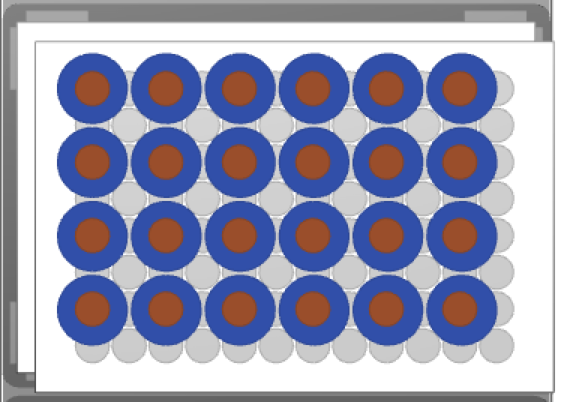
• Overlapping Labware: Ensure overlapping labware to align 96 sequence positions to the 24-well plate.
• Raster Alignment: Use an 18mm raster for the 24-well plate to ensure optimal tip alignment.
• Test Alignment: Verify alignment by using the 96-channel head (96MPH) and the desired tip pattern for teaching positions.
• Tracking Limitations: Sample tracking may not accurately detect 24-well plate positions, and volume calculations/following will be unreliable.
• Interaction with “Fake” 96-Well Labware: The 96MPH steps should interact with a virtual or “fake” 96-well labware overlay on the 24-well plate to maintain sequence conditions.
-
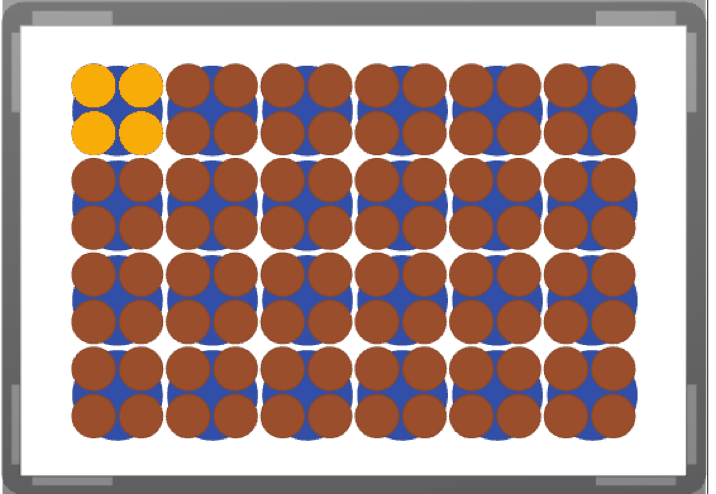
Tip-to-Well Ratios and Applications: 4:1 or 2:1 Tips per Well (Overlapping with Snapped Labware)
• Tip Configuration: Use overlapping labware with either four or two tips per well.
• Volume Capacity: Enables dispensing up to 4ml per well.
• Well Considerations:
-
Round Wells: Mind the dispense height; tips may fit, but the channel barrels might not fully clear the well.
-
Square/Flat Bottom Wells: Provides better access to the bottom of the well.
• Alternating Tips (2:1): Use either row-wise or column-wise alternation for washing applications.
- Applications: Ideal for washing plates, e.g., BVS or MPE2.
-
-
Tip-to-Well Ratios and Applications: 1:1 Tip-to-Well Ratio (Adjusted with Aligned Labware)
• Labware Positioning: Adjust the 96-well plate location so that A1 of both the 24-well and 96-well plates align.
• Reliable Aspirate/Dispense: Enables bottom aspirate or dispense positions, though volume following and speed calculations may be inaccurate.
• Channel Pattern Requirement: Must use a continuous channel pattern; alternate tips through physical arrangement if needed.