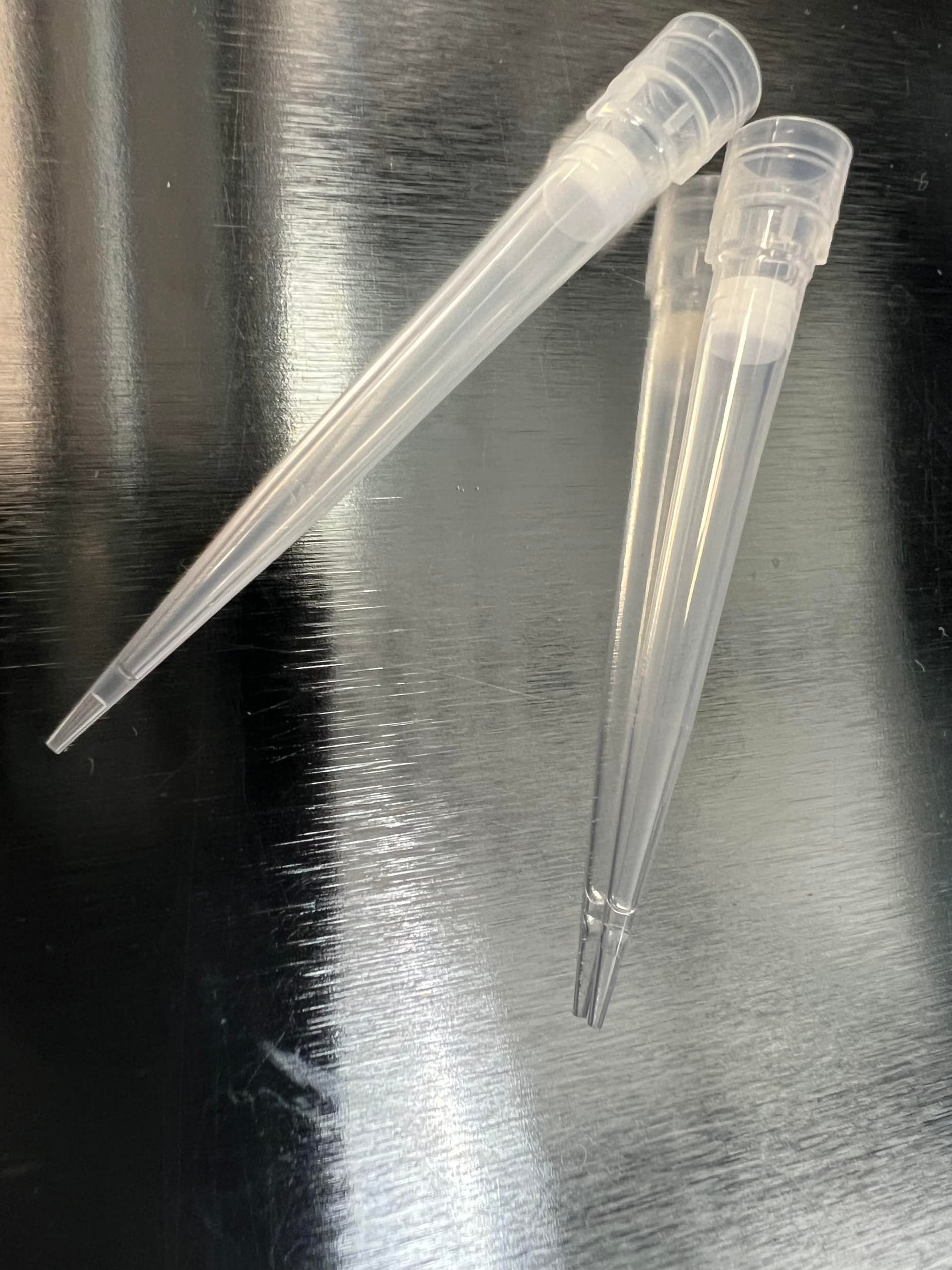
Hello. We are seeing residual volumes in tips with sticky liquids (master mix, beads). I’ve tried various settings (flow rate, blowout, integrated mixing, aspirate/dispense mixing), but still a small amount is lost after each action (0.5-1 uL loss). It can be worse with multiple mix cycles (2-3 uL loss). This does not occur manually. We originally accepted this as a system limitation, but with new sensitive workflow, this loss is impacting the quality of our data.
I don’t want to add too much blowout to introduce air since the volumes are low, forcing a fixed height aspirate.
Using a Vantage (VoV) with standard CORE channels. Eagerly looking for suggestions and solutions. Thanks for your ideas.
Hi there,
are you worried about the pipetting accuracy or wasting the residual?
If it is the former: I’d overaspirate and discard an excess volume. E.g. If you need to dispense 10 µL, aspirate 12.5, dispense 10 to the target and discard the remaining 2.5. Usually helps a lot with pipetting accuracy from my experience.
best
Dominik
Thanks Dominik. I don’t want to waste the residual. I want the total volume of the product (sample) delivered to the target - i.e. 25 uL volume in source well, 25 uL volume in destination. Losing sample is impacting our profiles.
I’d first try slower aspirate/dispense speeds. Beads in particular stick to the inside of the tips (also manually, but less noticeable due to smaller tips sizes) during dispenses. Slowing the dispense speeds prevents the PEG from beading up on the inside of the tip. You can also use smaller tips if that’s amenable to your volume sizes.
What was the mix volume you tried? In the example I provided, I would try 80% of total volume in the well so 40uL mix volume and probably between 5-10 mix cycles.
We use 50 uL tips - same tip diameter as 10 uL. Performance via LVK suggests the tips have similar accuracy/precision for low volume transfers.
All mixes are 8 cycles at 80% volume. I notice the beads do not ‘mix’ the entire volume. Even at slow speeds, the contents are not completely purged as the next aspirate starts.
The way I mix beads with my Bravos (which have much smaller bores on 50uL tips) is to aspirate quickly, but then dispense very slowly. If you dispense too fast the cohesion of the PEG is broken and you end up with a coating of PEG on the inside of the tip that coalesces at the bottom of the tip after dispensing. You could do a blowout, but that introduces bubbles and I don’t like that. Our dispense speeds are somewhere in the 15uL/s range I believe. But you’ll need to tweak that speed based on you pipette geometry.
This is correct, the 50ul tips and 10uL are actually based upon eachother.
Anyway, one of the liquidclass parameters that I use for low volumes of mastermix is the “over-aspirate” volume and I generally set it to the volume I want to aspirate. I had great succes with it for getting a reliable QC mastermix out of the tips.
Although the name suggest it is just over-aspirating. It works as a prewetting. So it aspirates and dispenses directly and then get’s your volume. For us it minimized the capilary effect and we were able to reliably aspirate/dispense 2uL with low CV%
Great, I’ll give that a try. In general I haven’t differentiated between aspiration and dispense speeds - but PEG stickiness is exactly what we’re coming across.