I’m looking to get some feedback on TADM from those who are actively using it or have used it in their workflows. I’m considering it for traceability purposes but want a read on whether it delivers in practice or creates more problems than it solves.
Specifically, I’d love to hear:
Pain points — Has it ever flagged false positives that interrupted runs? Do you find the threshold-setting process tedious? Any issues with specific liquid classes (viscous, foamy, low-volume)?
Effectiveness — How reliably does it catch actual liquid handling errors vs. noise? Do you trust it enough to use it in real runs, or mostly for development/validation?
Any other likes/dislikes, tips, recommendations will be appreciated.
On a similar note, any experience on MAD (monitored air displacement), the aspiration monitoring that comes with the standard Venus software?
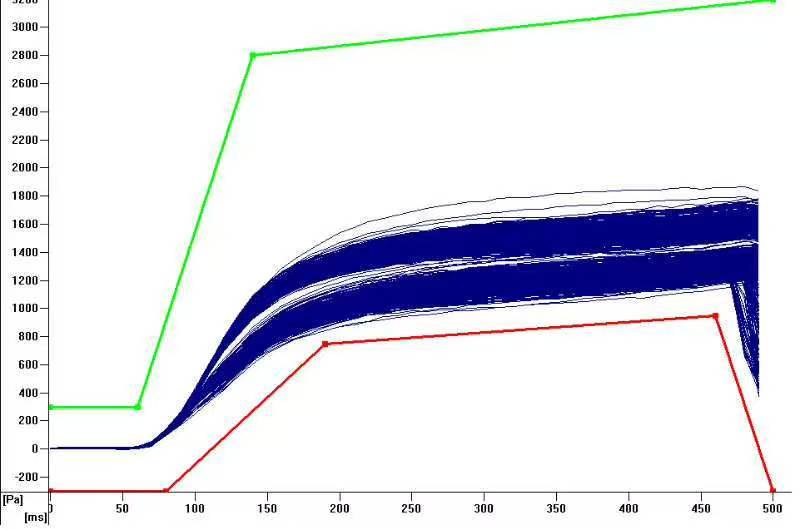
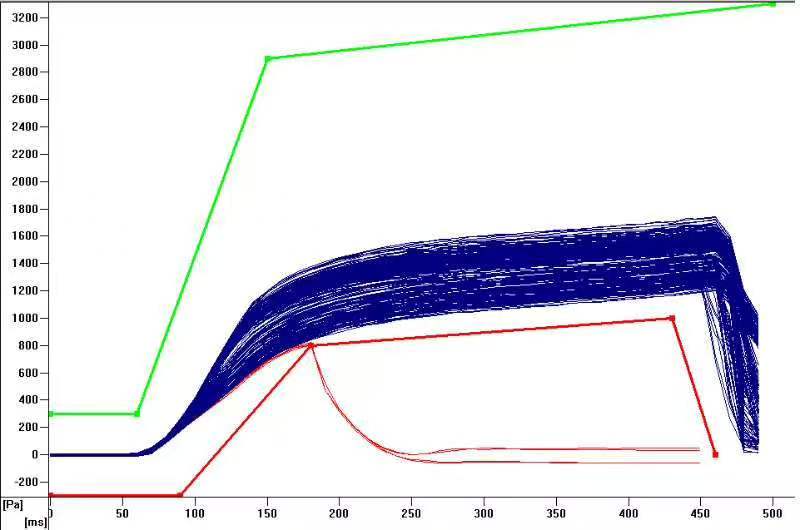
I used the TADM in the application of the blood screening. Actually TADM is was very powerful, it can recognize the clot/bubble or wrong volume. Even it can recoginze the difference between different tips (with filter and without filter) or air pressure of different altitudes. Following images is combined curves in two labs with different altitudes, TADM can recognize this difference of altitude, and this made a false positive result.
I’ve never used the thresholds but I’ve used TADM curves a lot for post-hoc analysis and they are very useful. You can detect many different things with TADM, even droplets hanging off a tip, phase separation, foam, etc. There isn’t really any cost in collecting the data and it could always be useful if an experiment fails for an unknown reason.
Not using TADM is the biggest fault labs can do. Apart from not having a Hamilton ofcourse.
It monitors your transfers AND you can see what is happening, after every step is completed you have the data so you can check your liquidclass on the fly. The monitoring is ideal but it’s a pain to setup correctly and you need to monitor it every X weeks. But if you have it working…it’s your biggest asset.
All in all I would use it in a heartbeat. Love it!
This is a great thread, I was also curious about implementation of TADM. Specifically, I was wondering if TADM is viable in a situation with varying humidity due to the HVAC system that’s set up and the Hamilton is not in a hood. On top of that, how would it perform for a matrix such as urine where the liquid properties can greatly differ from one sample to another.
Depending on the how tight your tolerances need to be, it is definitely viable! I’ve got a cluster of STARlets running almost exclusively urine (plus reagents, but the samples/transfers that get TADM attention are urine). We’re in the midwest, so we definitely see fluctuating humidity within the lab despite their efforts to keep it constant, and it shows in the TADM data. While there are TADM shifts with humidity, the general shape is the same, so I aim to collect the initial data set across multiple days/times/weather patterns to better represent the flux within the lab. Not to an excessive extent, still aiming for the same number of transfers overall, just spaced out over time.
Provided the tolerance bands are still the appropriate shape, it still catches all of the egregiously incorrect transfers like clots or short sampling. Occasionally I’ll have to adjust a few months later, particularly if I roll a method out during the more extreme ends of humidity swings, but for the most part that approach has been sufficient.
On the sample variance note, that is also addressed during initial band-setting data collection. Whenever possible, collect the initial dataset using a broad spectrum of donor samples and any standards/QCs that will be held to the same tolerance bands.