Hi,
Thank you all for the interest and feedback. Here is the progress on generating native Hamilton Venus .med methods.
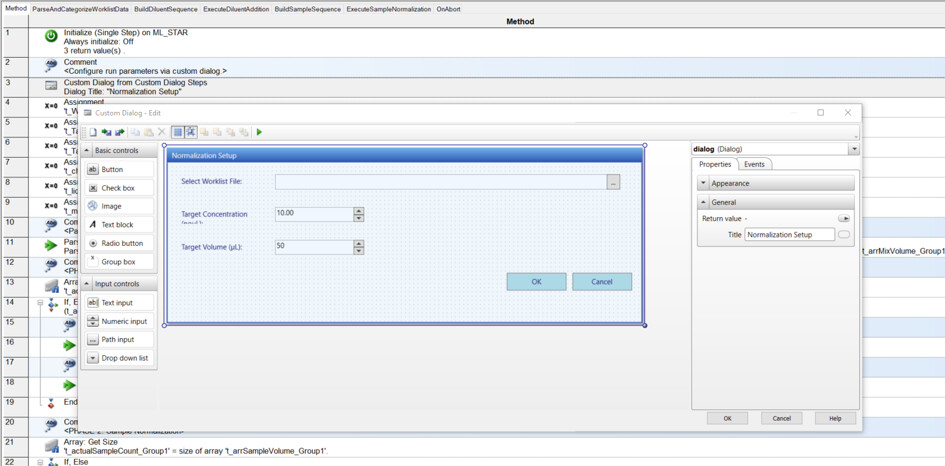
I began testing this capability by focusing on worklist handling. The goal is straightforward: upload a sample worklist, and the AI generates a complete .med method featuring a custom dialog for file selection. This generated method can then process any subsequent worklist that shares the same format.
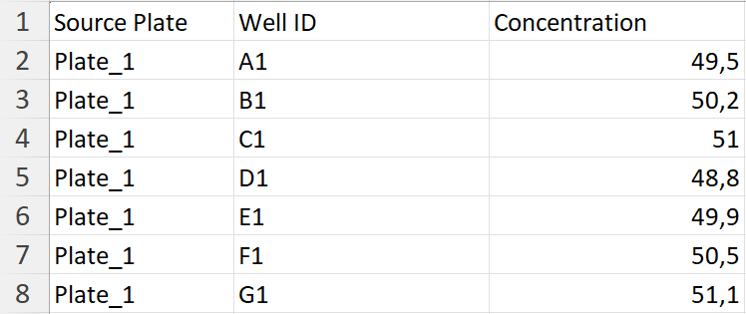
I evaluated the AI software using three scenarios: a basic worklist, a serial dilution worklist, and a normalization worklist. The first two were used to optimize the AI software, making the normalization worklist a unseen test case.
Below are the formats of these worklists, alongside the .med method generated specifically for the normalization task.
Initial testing shows a reasonably high first-pass success rate for generating functional methods. When errors do occur, they are typically minor, easily fixable syntax mistakes related to variables, arrays or sequence objects. However, the primary limitation at this stage is that the AI still struggles to utilize sequence objects in more advanced, complex ways.
I welcome your feedback and any questions you might have.
Best regards,
Xianghua
Demo video: https://youtu.be/wwiHBR2tH-s
1. Basic Worklist: Volumes range from 1 to 1000 µL. The method successfully groups volumes and automatically assigns appropriate tips and liquid classes.
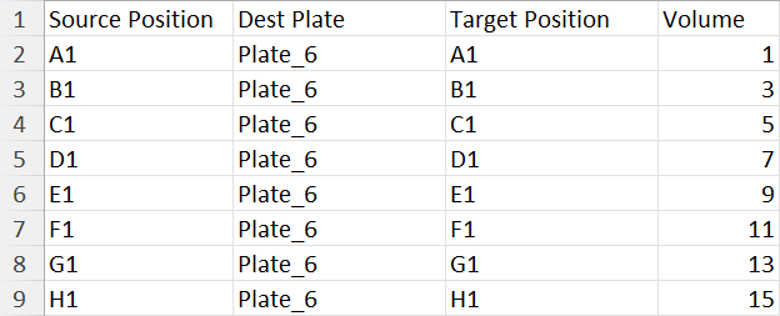
2. Serial Dilution Worklist: Based on the format discussed here: Help with worklist for serial dillutions
3. Normalization Worklist: The AI successfully generated a custom dialog featuring input textboxes for target concentration and target volume.
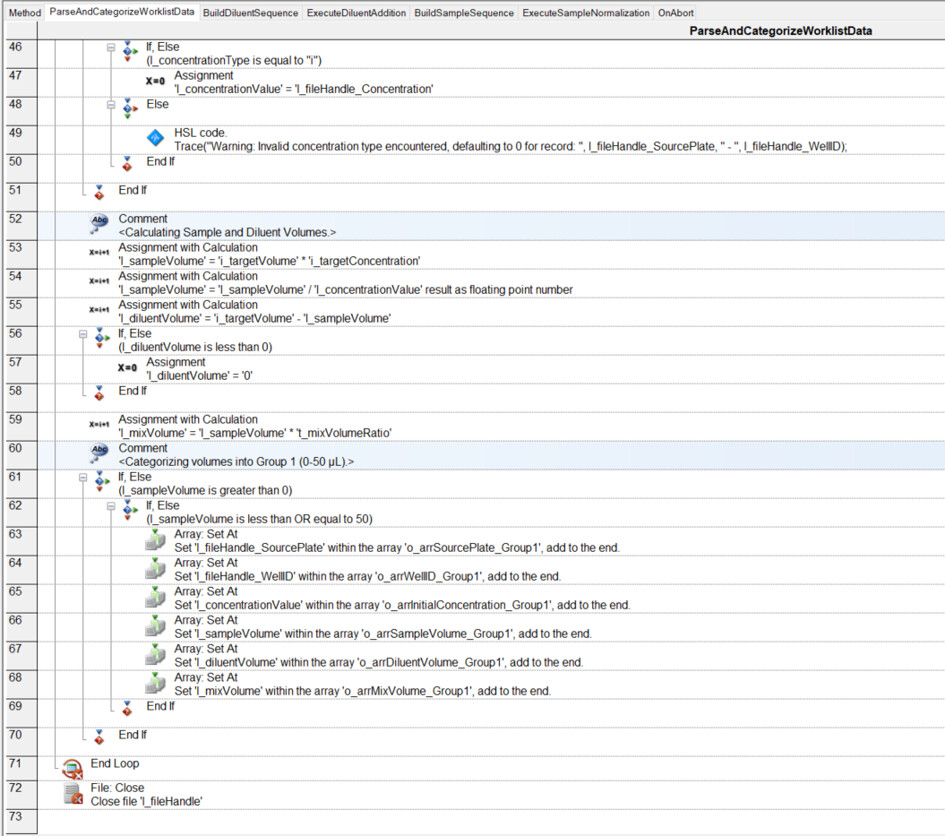
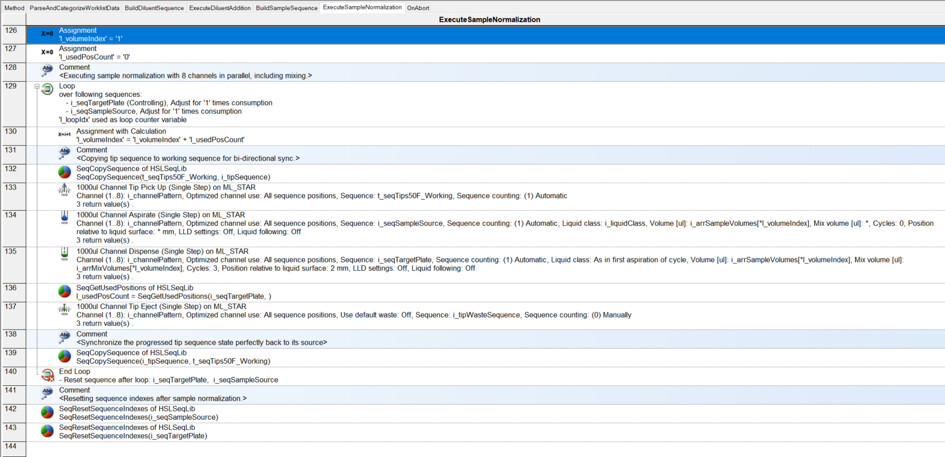
Below are parts of the .med method generated specifically for the normalization task. It was generated entirely by AI without a single manual correction, and it is functional.